
About The Author
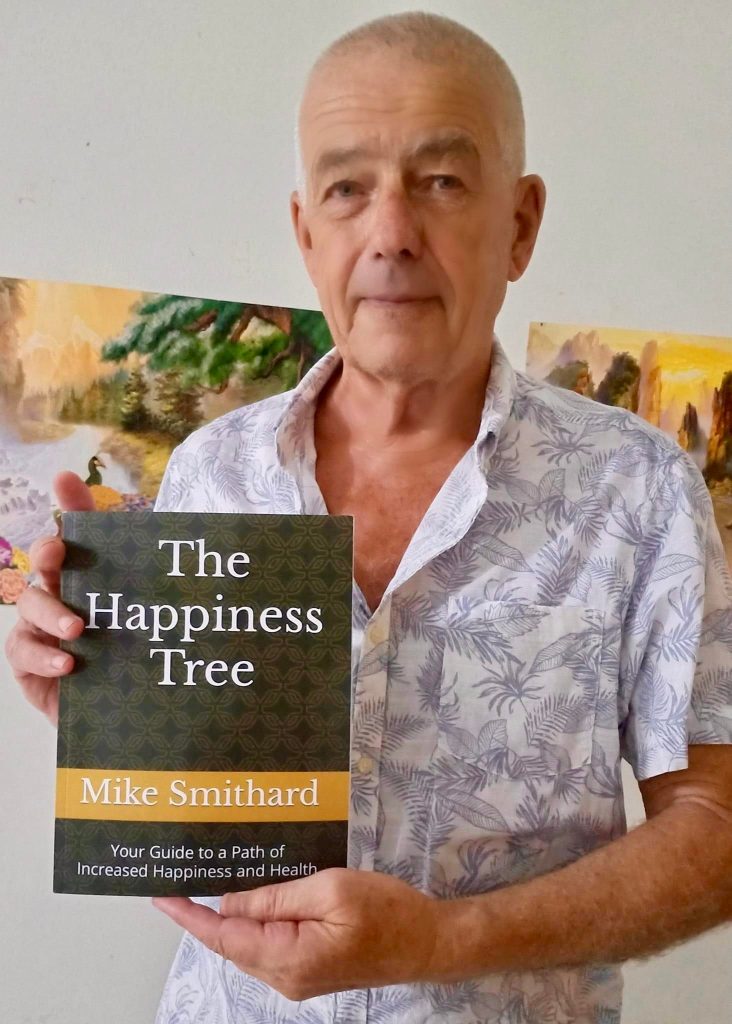
The author was born in, England in 1944. He graduated from Exeter University where he was awarded a PhD in Physics in 1970. He then worked as a research physicist at Warwick University and then at Ecole Polytechnique Federale de Lausanne in Switzerland. On returning to the UK, he switched to an engineering career, working for Marconi GEC, later BAE Systems. He developed expertise in ‘system engineering’ on multidiscipline projects and was awarded the GEC Prize for Individual Achievement for developing a teaching model of ‘System Engineering which was adopted company-wide.
He then taught this model in house, and as a visiting lecturer at the GEC Management College Dunchurch, and on MSc courses run by London and Loughborough Universities. He later spent a period of time as a self-employed inventor. He and his wife live in the UK, but also spend time each year with her family in Thailand. The Origins of This Work The author has long indulged his curiosity about ‘how things work’ and how new solutions can be found. He has long enjoyed the benefits of outdoor leisure and sports pursuits in countering a ‘sedentary lifestyle’ and ‘too much thinking’. He has a long-held interest in human origins.
During a period of ill health, he developed an interest in the effects of diet and lifestyle on health. During a period of unhappiness, he started to read a little about approaches to resolving unhappiness. More recently time spent in rural Thailand showed him at first-hand that many people achieve happiness despite living with extreme poverty, hardship, and insecurity. It also resulted in the opportunity to read a little about Buddhism, to observe life in a Buddhist village and by chance to have a fascinating conversation one day with a German Buddhist monk called Daniel who was passing by on pilgrimage across Thailand (and who subsequently sent the author some books to read, for which the author remains very grateful). The author started to learn a little more, though he found some of the concepts of Buddhism, Mindfulness and the subject of happiness difficult to grasp.
He started reading more, making notes and thinking about links to lifestyle, evolution and psychology. His notes seemed very jumbled up like a bowl of spaghetti. They lacked structure. He began to wonder if his previous experience of making a teaching model could help him remedy this. Partitioning a system of complex information into a simple structure is never easy. There are many possible options; none are perfect, but some are better than others. He wanted to find a structure that is simple, that groups together conceptually similar things, that is easy to understand and remember, that is self-consistent, without too much overlap, and that is balanced. And it had to be a structure that can be matched to a picture.
The author started grouping his notes according to the topic and found that he needed big paper charts, like family trees, stuck on the wall in order to see the whole picture. He couldn’t, at first, reconcile the very different natures of some of the topics that made up these roots. One day he turned some of them upside down and they became the branches and that improved things. He couldn’t at first find a suitable way to split the remaining roots into suitable topics without overlaps or omissions, nor a suitable terminology for the headings. Eventually, he found that the subdivisions of thought, action, reaction, and interaction seemed to work better than others he had tried. He also decided to maximise the use of the words learn and choose because they are crucial to any self-help process. After a few more years, many iterations, pauses and doubts, the present Happiness Tree structure emerged. It is not perfect, but after many iterations and false starts, the author finally feels that it meets the intended aims well enough.
After subsequent problems trying to disentangle and structure the many threads and apparent contradictions regarding the subject of happiness, the Happiness Cup model later followed. After a few more years of work, with feedback and encouragement from friends, the book started to come together in its present form. More recently, after a further period of work trying to understand some of the more fuzzy aspects of our thinking, the Mind State model was added. In any work such as this, there will doubtless be some errors and omissions. On some of the more contentious subjects dealt with, there will also remain differing views. In addition, science will continue to reveal more. The author regards this book as unfinished business but feels that he has learned a lot on this journey.
He hopes that he can succeed in sharing some of that with you. As a relative beginner, he doesn’t claim to have implemented or tested all the many ideas presented here, but he has benefited from some at least and intends to try more. The Justification for This Book Over the ages, many monks, teachers, scholars, doctors, and scientists have devoted their entire lives to developing and testing in depth the various branches of specialist knowledge that we touch on here. You may think it impertinent for a non-expert, who has only skimmed the surface by reading a few books, and not studied the subjects in great depth, to produce a summary in the way that the author has attempted.
On the other hand, you might say that,
- It’s worth a try, because if the aim could be achieved then it would be very useful to many people
- Even if only partially successful the material could be progressively improved with more expert help (the structure lends itself to modular improvement, pinpointing errors or omissions and remedying them)
- The result, though imperfect, might be sufficiently good to encourage and signpost the reader to more detailed, more authentic sources of specific interest (acting as a map for the journey)
- The picture analogies, though imperfect may help understanding. Some might say that the Buddha’s teachings are complete and perfect as they stand and there is no need to represent them in a different way or add to them.
There is truth in that. We are after all the same humans now as then, and his insights were so profound that they have stood the test of time. On the other hand, our health and wellbeing are now under threat in some new ways due to our lifestyle (factors such as plentiful but poor diet, lack of exercise, overworking, stress etc.). These factors are linked to obesity, diabetes, heart disease, depression and more. Health contributes to our sense of well-being. The Buddha once said that it was our greatest gift. It seems not illogical therefore to put health in the same model as happiness. Also, our lifestyle provides some of the sources of our happiness (achievement, job satisfaction, having fun, relationships etc.) and so deserves its place in any model of happiness. Another factor is that our pollution of the planet has increased dramatically in the last few hundred years, therefore, in this model, conservation is added to the section dealing with morals.
There are already hundreds of books, websites and videos out there covering Buddhism, Mindfulness, Nutrition, Exercise and other subjects are dealt with here, so you could say that we don’t need yet another one. That also is true. On the other hand, if the presentation format used here could help the non-expert to understand the subject better if it could bring together relevant diverse material into one accessible place, and if it could act as a sort of grid map of the subject, then that might be considered justification. After all, the messages were never more relevant than now. The World Health Organisation has warned that mental illness will be the biggest global burden of disease by 2030.
Our minds and bodies are very complex. Any work such as this can raise as many philosophical questions as it answers. We know that ideas come and go. Is this model based on truth or is it just part of another hyped fashion trend? As you read this book, you will see that the author has referred (albeit not in an academically rigorous way) to scientific evidence that supports some of the ideas presented here (for example; the benefits of meditation and exercise, the mind-body connection, the effects of stress and diet on health, and the evidence of our evolutionary past). For some other aspects, especially those relating to traditional techniques, there is less scientific evidence. On the other hand, some of these techniques have been written down, taught and practised continuously for two thousand years or more. Some of them are used by present-day therapists who say, based on long experience, that they work. This may, despite the lack of evidence, persuade you to give them a try and find out for yourself if they are “true” in practice for you.